Program Components
Components of NC State’s Compliance and Integrity Program
Consistent with the Mission, Vision and Values of NC State, the university recognizes the following principles as important elements for an effective compliance and integrity program:
- A governance structure that supports leadership oversight of the Compliance and Integrity Program;
- A top-down division of ownership and accountability among university personnel with compliance roles and responsibilities;
- Established foundational dataset and responsibility matrix that identifies and publishes, both internally and externally, compliance subject matter areas and compliance owners;
- Incorporation of the University’s core values into the culture of ethics and integrity at NC State;
- Periodic review and evaluation of policies, regulations and rules impacting university compliance functions;
- Internal monitoring and decentralized oversight of university risks that utilizes metrics and centralized data collection;
- Effective training and education on compliance subject matter and university-wide ethical standards;
- Maintaining open lines of communication, including reporting mechanisms for campus community members to report possible compliance issues without fear of retaliation;
- Rapid response and prevention protocols, including prompt investigations and appropriate corrective actions to prevent similar offenses when detected; and
- Communication to the campus community about compliance requirements and annual notices.
- Further information about the NC State Compliance and Integrity Program’s components can be found below and in the NC State Compliance and Integrity Program Plan.
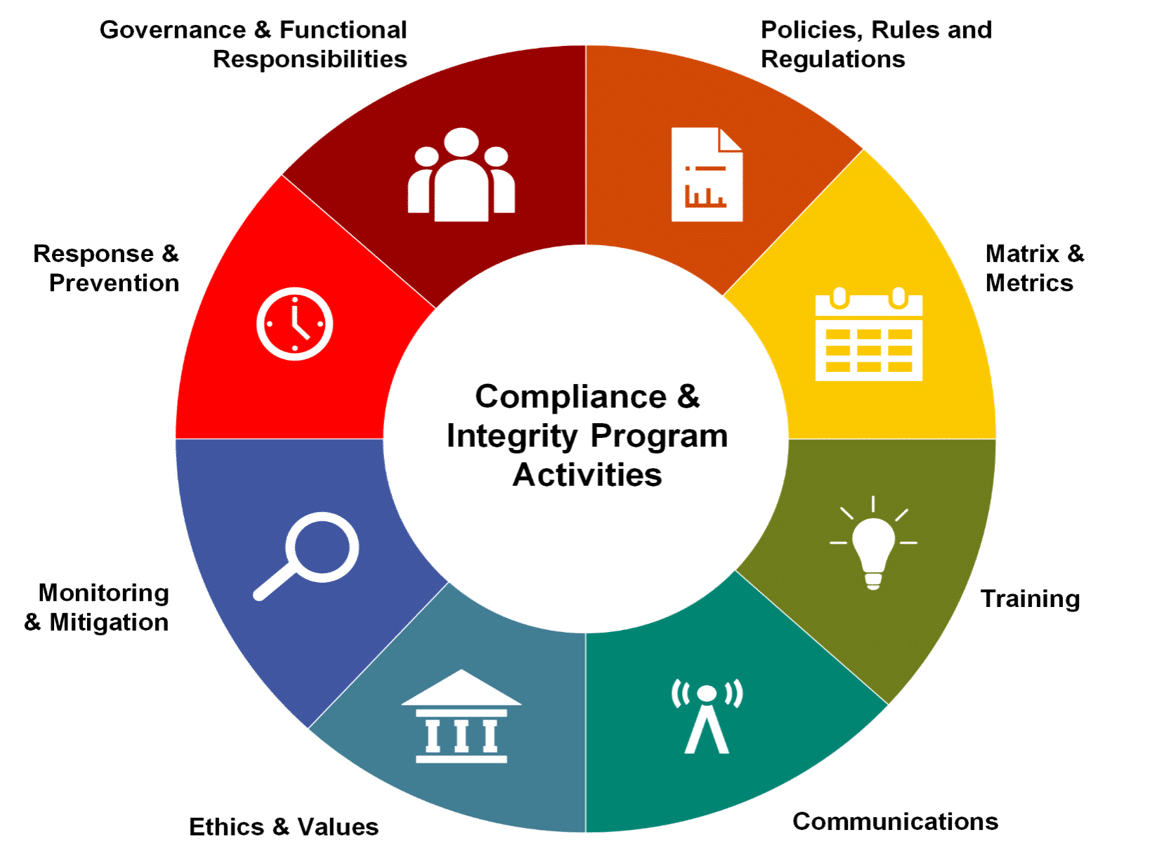
Governance & Oversight
- Ownership by leadership
- Strategic direction
- Cascade to campus community
Matrix & Functional Responsibilities
- Web-based compliance responsibility matrix
- Identification of compliance subject matter areas
- Defined compliance roles & responsibilities
Ethics & Values
- Incorporation of university core values
- Commitment to an ethical culture
- Integration into strategic planning
- Attainment of institutional compliance
Compliance Policies and Procedures
- Continuous development of PRRs, SOPs and best practices
- Regular reviews of PRRs
- Refinement of internal guidelines & standards
Monitoring, Metrics & Mitigation
- Monitor internal and external compliance objectives
- Risk assessment & mitigation
- Performance evaluation criteria
- Conflict and vendor management
Training
- Web-based & in-person training tools
- Holistic and comprehensive multi-media presence
- Mandatory and voluntary training opportunities
- Support for unit-based training
Reporting, Response & Prevention
- Whistleblower & anonymous reporting
- Rapid response protocols
- After-action review
- Identification of opportunities for improvement
Communications
- Communication strategies
- Robust website development
- Chancellor’s messaging to campus community